


Recommended for you

Zaganelli (CREA): “Fresh produce as a laboratory for scientific research and resilience”
Director-General Maria Chiara Zaganelli explains CREA’s role in defining the fresh produce sustainability standard and the many innovative projects shaping the sector.
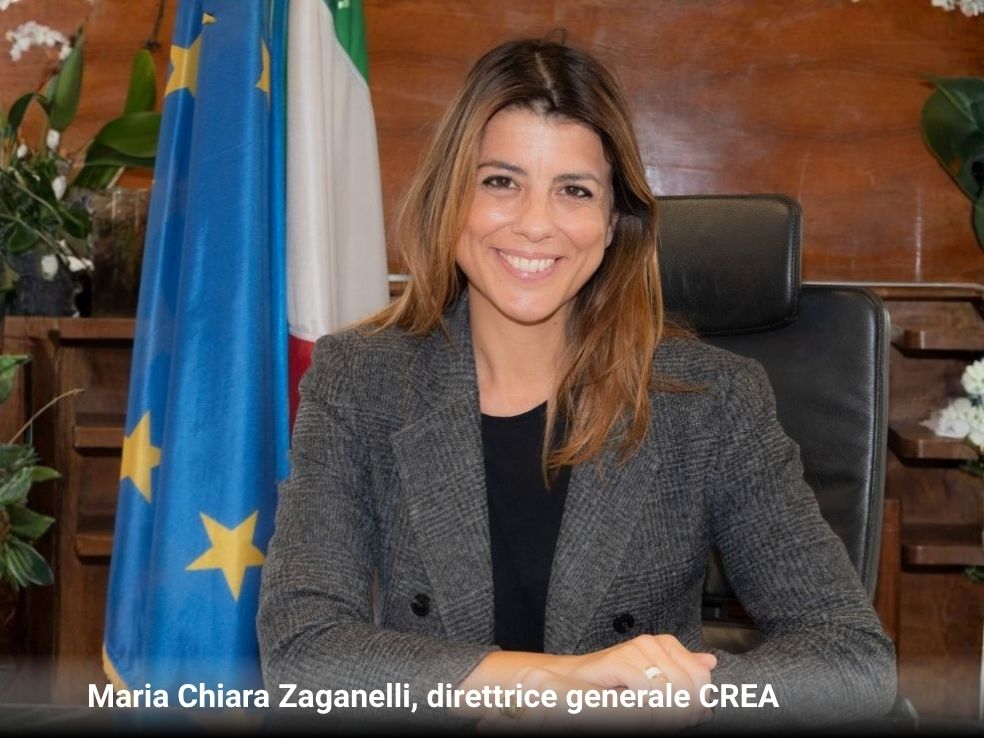
Maria Chiara Zaganelli is the Director-General of CREA (Council for Agricultural Research and Economics), the scientific partner of the Generazione Ortofrutta project for the development of the fresh produce sustainability standard. In this interview, we explore the most critical chapters of applied research in fresh produce, how the sector will evolve over the next decade, and the competitive advantages that adopting a scientific, measurable, and certifiable standard will bring to fruit and vegetable enterprises.
What are the main areas of scientific research CREA is currently pursuing in the fresh produce sector?
CREA’s scientific research in the fruit and vegetable sector currently focuses on several interconnected areas. A priority area is genetic improvement, aimed at developing varieties that are more productive, disease-resistant, adapted to climate change, and offer superior qualitative traits, while also enhancing local biodiversity through cross-breeding and Assisted Evolution Technologies (AETs). Alongside this, agronomic innovation plays a major role, featuring precision irrigation techniques, sustainable nutrition, and low-impact cropping systems, with a strong focus on eco-friendly plant protection based on biocontrol, beneficial microorganisms, and the reduction of synthetic plant protection products. Furthermore, digital agriculture is playing an expanding role by leveraging sensors and AI-driven predictive models for agronomic decision-making. Another key area is research into nutritional quality and eco-friendly post-harvest preservation to extend shelf life and preserve organoleptic properties. In parallel, CREA is developing studies on the circular economy to valorise fresh produce waste and by-products. All these domains must be studied and deepened through the lens of careful climate risk assessment, integrating both mitigation and adaptation strategies.
In which areas does the fresh produce sector excel in innovation?
The sector excels in innovation particularly where productivity, quality, and sustainability come together. A fundamental role belongs to genetic improvement, where new varieties are selected to better withstand climate stresses and phytopathologies while satisfying consumer preferences. A second highly advanced area is precision agriculture, which utilizes sensors, satellite data, digital systems, and Decision Support Systems (DSS) to optimize irrigation, nutrition, and crop protection through data analysis, thereby boosting production efficiency, reducing resource waste, and improving environmental sustainability. Protected cultivation technologies are also seeing major advances, including smart greenhouses, soil-less systems, and hydroponics, which enable more efficient production with lower resource consumption. Fresh produce is also highly innovative in sustainable crop protection through biocontrol, beneficial microorganisms, and integrated strategies. Another area of excellence is post-harvest quality, with solutions designed to extend shelf life, preserve nutritional properties, and reduce losses across the entire supply chain. Finally, the circular economy is playing a growing role through waste recovery and the production of new high-value-added compounds. In short,
fresh produce innovation stands out whenever it successfully converts scientific knowledge into operational efficiency and supply chain quality.
From a scientific standpoint, what are the biggest challenges for sustainability in fresh produce?
Scientifically, the greatest challenges surround our capacity to produce more while using fewer natural resources. The primary challenge is water management: droughts, water scarcity, and increased climate variability demand increasingly efficient advanced irrigation systems and precision technology. A second crucial issue is reducing the reliance on fertilizers and plant protection products without compromising yields and quality, which requires developing sustainable nutrition and biological control strategies. From a scientific perspective, climate change adaptation is equally critical—namely, selecting varieties that are more resilient to heat, salinity, emerging pathogens, and extreme stress. In this context, CREA’s commitment to AETs through the MASAF-funded TEA4IT project opens up promising prospects; the first field trials have already begun, with more scheduled to launch. Another key challenge concerns soil fertility, which must be preserved through agronomic practices capable of maintaining organic matter and microbial biodiversity. There is also a growing need for post-harvest innovation to minimize waste, quality loss, and energy consumption during storage. Lastly, a major scientific challenge lies in achieving true supply chain circularity by transforming by-products and residues into new resources. In summary, sustainability in fresh produce requires a delicate balance between biological innovation, agronomic efficiency, and environmental resilience.
What does being part of the Generazione Ortofrutta project mean for CREA?
For CREA, participating in the Generazione Ortofrutta project is both a strategic opportunity and a major responsibility. It means actively contributing to an initiative that promotes sustainability by creating a virtuous circle between producers and consumers, making both key active participants in the agri-food system.
Today, sustainability can no longer be viewed as an isolated dimension—whether environmental, economic, or social—but must be understood as a true cultural perspective.
This requires an integrated, multi- and interdisciplinary approach capable of connecting scientific knowledge, technological innovation, farming practices, environmental and socio-economic impacts, and consumer behaviour. Within this framework, CREA contributes its wealth of expertise and research capabilities through the involvement of both its cross-sector and supply-chain-specific Research Centres. Our contribution aims to support the development of more sustainable production models, enhance the quality of fresh produce, and foster greater awareness along the entire supply chain, from field to table.
What will having a shared sustainability standard mean for fresh produce?
Having a shared sustainability standard represents a true leap in quality: turning principles into concrete actions through scientifically grounded, clear, measurable, and sector-wide recognized criteria. For producers, it offers a reliable compass rooted in research evidence to guide agricultural practices, refine processes, and showcase their commitment to more sustainable models. For consumers, it enables informed choices backed by reliable, transparent, and verifiable information. A shared standard guarantees safety, transparency, and credibility: it certifies that products meet precise sustainability, quality, and health requirements, and that these criteria are defined and monitored with scientific backing—strengthening the bond of trust between producers and consumers. It goes far beyond labels; it provides a system that makes real-world impacts visible and measurable. Moreover, adopting common criteria helps highlight healthier, higher-quality produce, delivering positive outcomes for both consumer well-being and business competitiveness. By choosing a certified product, consumers do not merely purchase food; they actively participate in environmental protection and the preservation of global resources. In this sense, a shared standard becomes an essential tool for advancing a more sustainable, transparent, and forward-looking fresh produce sector.
What will CREA’s role be in defining and implementing this standard?
Leveraging its 12 research centres and wide range of expertise, CREA will make a concrete contribution to building the standard by working on its various technical components: from environmental sustainability and production quality to impact indicators and monitoring systems. Every area will be addressed in light of the latest scientific evidence, ensuring the framework’s robustness, consistency, and credibility. CREA’s involvement will not be limited to the drafting phase. The Council will also play a leading role in the standard’s implementation, supporting its application across the supply chain and translating theoretical principles into operational tools, practical application, and innovative solutions. In this process, CREA’s ability to integrate multidisciplinary skills represents a core value: agronomic research, environmental analysis, technological innovation, and production system studies converge to build a truly effective and applicable standard. In short, CREA will act as a guarantor of scientific rigor and as a bridge between research and practical application, helping develop an authoritative, measurable standard capable of guiding the fresh produce sector toward increasingly sustainable and competitive models.
How will Italian fresh produce evolve over the next 10 years?
Over the next decade, Italian fresh produce will increasingly move toward a highly technological, selective, and high-value-added production model. The most competitive businesses will be those capable of integrating innovation, digital tools, and improved supply chain organization. The importance of new varieties selected for greater tolerance to stress and climate change will continue to grow. Precision agriculture will become central to future farming through the widespread adoption of sensors, data analytics, and smart irrigation systems, optimizing resources and increasing productive efficiency. In parallel, environmental sustainability will gain even greater focus, characterized by reduced chemical inputs and enhanced water efficiency. Sustainable packaging and waste recovery will also grow in importance. The market will reward certified, traceable, and high-quality products. Driven by climate change, we will also witness a gradual geographic redistribution of crops: certain traditional species will shift toward climatically more suitable regions, while crops currently considered niche could become economically significant in specific areas—as seen in the expanding cultivation of tropical fruits in parts of Southern Italy. In short, the future of Italian fresh produce will depend on its ability to combine research, territorial identity, supply chain innovation, sustainability, and forward-thinking vision.


