

Recommended for you


“Sustainability and profitability: two sides of the same coin”
Maria Luisa Terrenzio of PrimaBio shares her story and outlines the perspective of a new generation of fresh produce growers.
“Who am I? I’m a sprinter, an instinctive person. But this job has taught me to be a marathon runner. Sustainability in fresh produce? It cannot be just a slogan, it must allow businesses to generate income. That is the only way fresh produce enterprises can attract young people while remaining environmentally virtuous and ethically sound in their labour practices.”
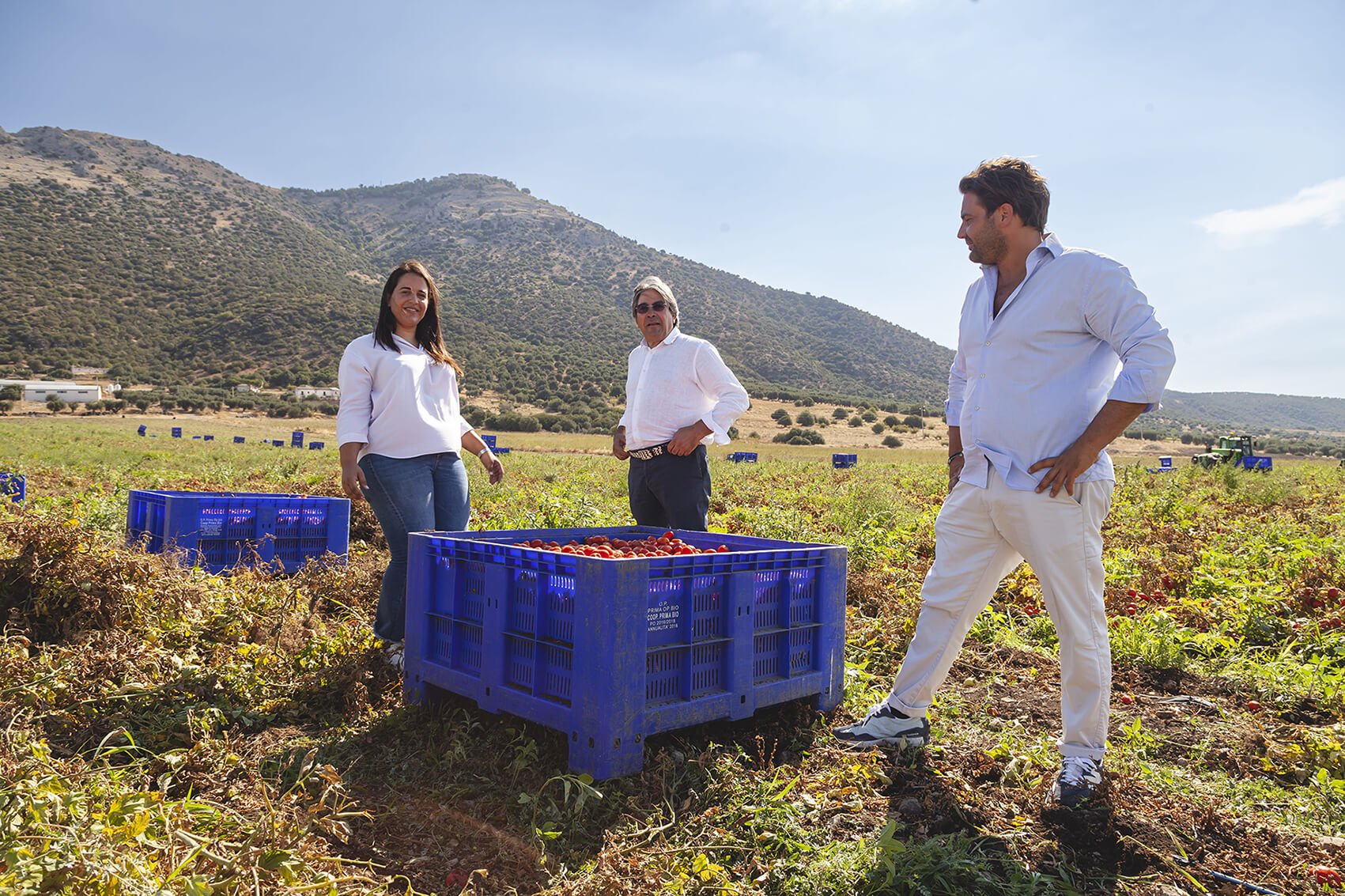
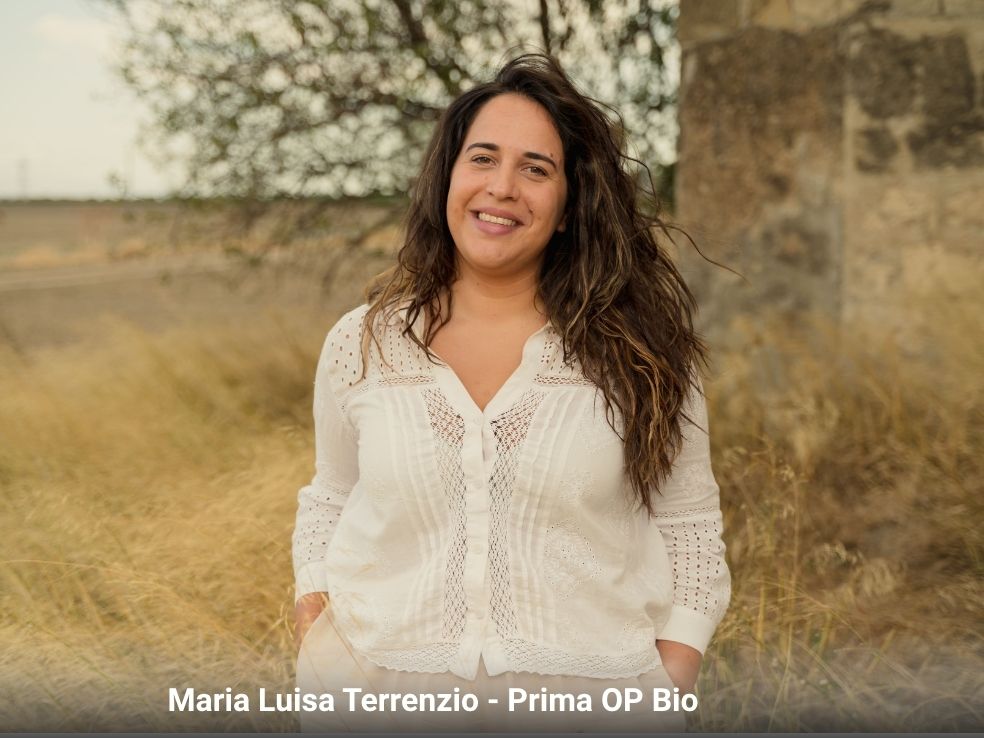
Maria Luisa Terrenzio is 32 years old, holds a degree in Business Administration from LUISS University in Rome, and serves as Commercial Manager at “PrimaBio”, an agricultural cooperative founded by her father in Rignano Garganico, in the province of Foggia, during the 1990s. The cooperative chose organic farming from the outset and is deeply committed to combating illegal labour exploitation (caporalato). Combining pragmatic execution with a strategic vision that extends beyond daily operations, Terrenzio has also served as President of the Young Farmers’ Group at Confagricoltura Foggia since 2025. Her words capture the core essence of the present and future of fresh produce enterprises: evolving into innovative, modern businesses without severing their connection to the land. This philosophy underpinned her choice between Rome and the Gargano region, leading her back to Apulia in 2017.
A deliberate choice
“After graduating from LUISS, I completed an internship at the Ministry of Agriculture. Sitting in chaotic Roman traffic every day, I realised that was not my path. The countryside has always been my natural environment. I decided to return to Apulia and join the cooperative as a partner, even though I lacked specific agricultural expertise.”
For the past eight years, she has overseen domestic and international commercial management, strategic sustainability projects, and university relations. It is this mix of managerial expertise and strong sense of heritage (“I represent the third generation; my paternal grandparents were the first to bet on these agricultural lands reclaimed in the 1960s”) that provided fertile ground for the cooperative’s projects to flourish further.
When being organic “is no longer enough”
“What was my ‘GO’ moment? The spark that drove this choice? Let’s say the initial step was deciding I didn’t want to stay in Rome. What followed was a progressive daily awakening, because working in agriculture is far from easy. But the more collaborative relationships I built, the more I felt that the company and its organic philosophy provided solid foundations to build upon.” For Terrenzio, organic farming means far more than avoiding chemicals and pesticides. “It means short supply chains, optimizing water resource management, and repurposing waste. However, all of this must also be economically viable.” Organic broccoli accounts for 75% of the cooperative’s fresh produce volume: “Previously, there was a 25–30% price premium compared to conventional produce. Today that gap has narrowed to just 15%, and promotional campaigns frequently eliminate it altogether. It is clear that producing organically is no longer enough; businesses must diversify their approach to sustain the model.”
A truly sustainable model
Sustainability is a complex issue for businesses, especially smaller ones, but at PrimaBio the path has always been clearly defined.
“Choosing organic is already an environmental sustainability commitment; we care just as deeply about social sustainability. We joined the ‘NO CAP’ association to combat illegal labour exploitation, connecting businesses that respect fair working conditions for staff. This enabled us to secure an ethical accreditation validated by large-scale retail, which communicates our commitment directly to the end consumer. Effectively communicated value allows us to command a fairer price, which is absolutely fundamental.”
Communicating value to the end consumer
Reaching consumers and conveying a commitment to sustainability is also the primary challenge of the Generazione Ortofrutta initiative, which is establishing a shared fresh produce standard that PrimaBio adheres to through its Producer Organisation (PO). “A unified standard and a clear identifier of this commitment are vital for engaging in more productive negotiations with large-scale retail. Consumer sensitivity, especially among younger generations, is moving in this direction. Millennials and Gen Z approach their shopping baskets differently. They read labels; they research who produces the food and how it is grown. If content and quality are present, they are willing to spend a little extra.”
The ‘GO’ of young growers toward the fresh produce of tomorrow
When it comes to what is needed to bring young growers back into the field, Terrenzio has no doubts. “Young people demand stability and profitability for enterprises. Compared to past generations, relying solely on intuition is no longer viable. Reality shifts too fast; amid global crises, you must be properly equipped. We need to transform agricultural holdings into modern enterprises capable of integrating data, technologies, and market access without losing their connection to the land. This is the path ahead, the ‘GO’ that young growers can give to the fresh produce of tomorrow.”
Gallery