


Recommended for you


Precision farming: using data to reduce water and fertiliser consumption
According to the European Commission, agricultural digitalisation is one of the key tools for using natural resources more efficiently and making the farming sector more sustainable. But what does precision farming actually involve?
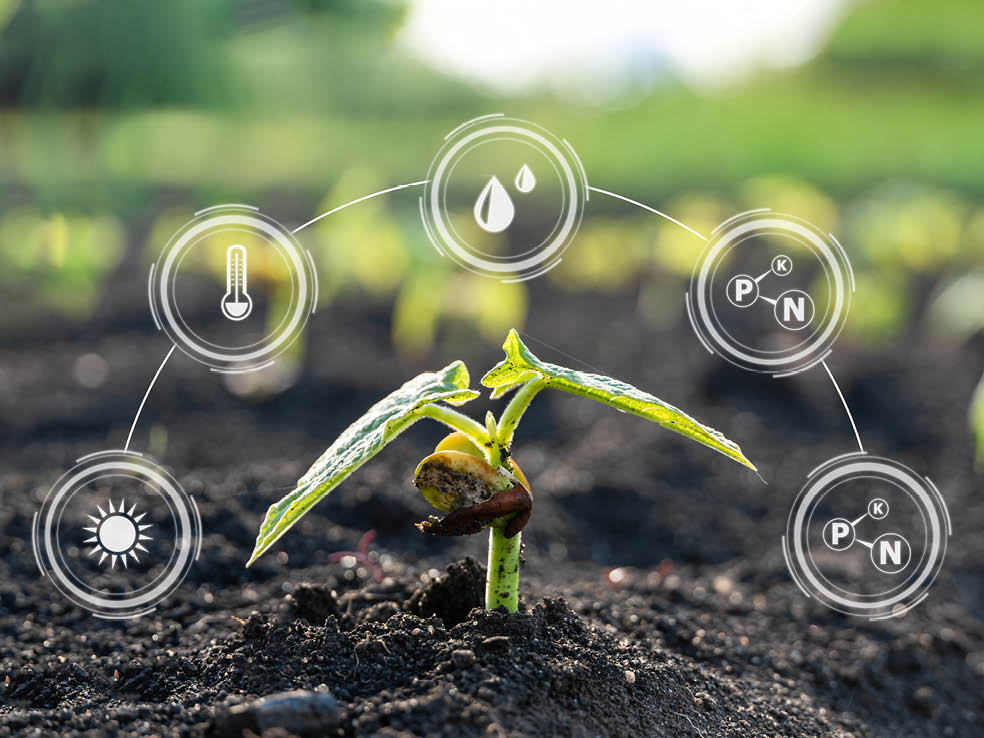
In recent years, agriculture has become increasingly data-driven: soil sensors, satellite imagery, drones, and digital models allow crops to be monitored with exceptional accuracy. The result is more efficient management of natural resources, particularly water and soil, delivering tangible sustainability benefits for crop production.
Water management is one of the areas where precision farming yields the most evident results. Through monitoring systems and predictive models, farmers can determine exactly when to irrigate and how much water to apply, avoiding excessive or ineffective irrigation. Furthermore, digital technologies make variable-rate irrigation possible within the very same field. Areas with different characteristics can receive varying amounts of water, enhancing application efficiency and contributing to water resource protection.
Fertilisation can also become more precise through data usage. Soil analysis, digital mapping, and decision-support systems enable fertilisers to be applied exclusively in the right quantities and locations. This targeted management helps reduce nutrient losses into the soil and water bodies, improving the environmental sustainability of crops.
According to the Smart AgriFood Observatories of the Politecnico di Milano, the adoption of digital solutions in agriculture continues to grow. In 2024, the Italian Agriculture 4.0 market reached a value of approximately €2.3 billion, with 41% of agricultural holdings using at least one digital solution and nearly a third employing two or more. 4.0 technologies now cover roughly 9.5% of the national utilised agricultural area, a fraction that remains limited but is steadily rising compared to previous years.
For the fresh produce sector, where water and soil quality are vital resources, precision farming represents a major lever for improving production efficiency and lowering environmental impact. Using data to guide field decisions means producing more using fewer resources, delivering benefits for the environment, farming enterprises, and the entire supply chain.
Sources
- European Commission. Digitalisation of Agriculture. European Commission, https://digital-strategy.ec.europa.eu/en/policies/digitalisation-agriculture.
- CREA – Council for Agricultural Research and Economics. Agricoltura 4.0: agricoltura digitale di precisione e innovazione tecnologica per un settore sempre più verde e all’avanguardia. CREA, https://www.crea.gov.it/-/agricoltura-4.0-agricoltura-digitale-di-precisione-e-innovazione-tecnologica-per-un-settore-sempre-pi%C3%B9-verde-e-all-avanguardia.
- CREA – Council for Agricultural Research and Economics. Dal CREA soluzioni digitali innovative per l’agricoltura di precisione. CREA, https://www.crea.gov.it/-/dal-crea-soluzioni-digitali-innovative-per-l-agricoltura-di-precisione.
- Smart AgriFood and Food Sustainability Observatories – Politecnico di Milano. Smart AgriFood: il digitale per una filiera agroalimentare sostenibile. 2025 Report, https://blog.osservatori.net/hubfs/comunicatia5/Report%202025/Report%20Smart%20AgriFood%202025.pdf.


