


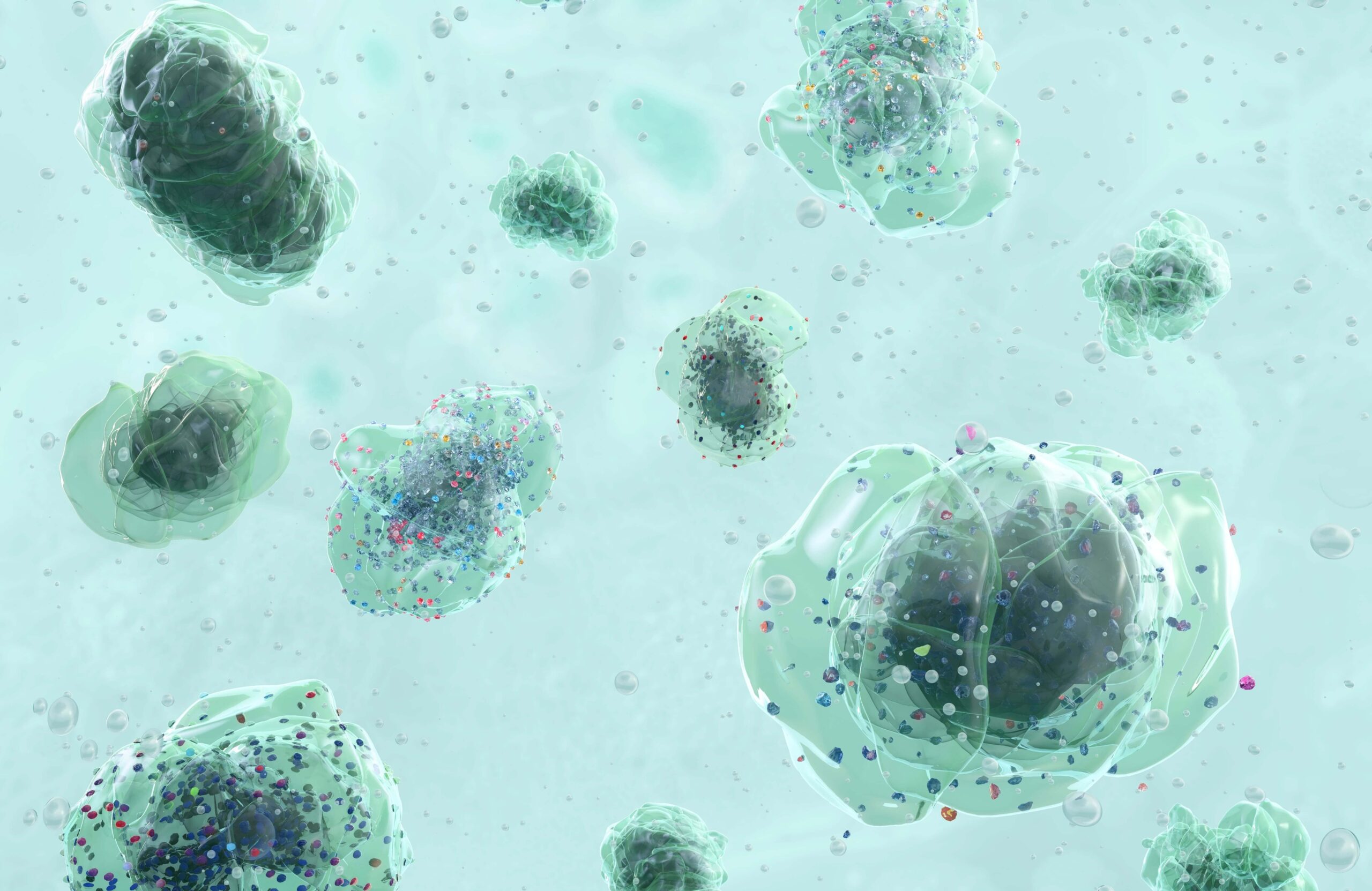
Particelle di microplastica e frammenti di polimero sintetico che galleggiano in un ambiente acquatico contaminato.
Recommended for you


Soil and Water
Sustainability is built at the dinner table, starting with fresh fruit and vegetables.
03/04/2026
15/04/2026
Microplastics: what they are and how they impact the agri-food supply chain
The presence of microplastics in the environment is currently at the centre of scientific debate and environmental policy. These particles of plastic material, ranging in size from 5 millimetres down to 1 micrometre (1 µm = 0.001 mm), are invisible or barely visible to the naked eye, generated through the fragmentation of items and packaging or intentionally added to certain products. Due to their minute size, they spread easily through water, soil, and air, accumulating within ecosystems.
This issue closely concerns agriculture and the fresh produce sector. In this domain, traditional plastic is widely used (and currently indispensable) in mulching films and irrigation systems. If not properly managed at the end of their life cycle, these materials can contribute to the presence of microplastics in cultivated soils, impacting soil structure and the activity of organisms that maintain its fertility.
Reducing the release of microplastics therefore requires intervention upstream in the supply chain. From the selection of materials and agricultural inputs to the management of waste residues and packaging, preventive measures can help safeguard soil and water resources while improving transparency across the production chain, in line with growing demand for quality and sustainability. The positive news is that this preventive trajectory is already underway.
This environmental dimension is also mirrored in consumer expectations. A survey conducted by YouGov Shopper for Italia Ortofrutta highlights that 35% of Italians cite microplastics as their primary concern among environmental sustainability issues.
In recent years, Europe has accelerated preventive measures through new regulations aimed at reducing packaging waste and boosting recyclability. On a broader scale, the OECD also indicates that combining economic and industrial levers, such as reducing virgin plastic, investing in recycling, and adopting circular design, can significantly curb the release of microplastics into the environment.
Technology also offers concrete tools: more advanced filtration systems in water treatment plants, solutions to intercept particles before they reach water bodies, and the development of innovative, biodegradable materials. While these interventions will not solve the problem single-handedly, they contribute to mitigating its impact over the medium to long term.
These developments translate into supply chains that pay closer attention to water and soil quality, ensuring greater alignment between production practices and sustainability criteria.
Sources
- Center for International Environmental Law (CIEL). Sowing a Plastic Planet: The Fertilizer Industry’s Toxic Relationship with Plastics. CIEL, 2022, https://www.ciel.org/wp-content/uploads/2022/12/Sowing-a-Plastic-Planet_1dec22.pdf
- Ministero dell’Ambiente e della Sicurezza Energetica. Sostanze chimiche, ambiente e salute – Accordi internazionali sulla gestione delle sostanze chimiche. MASE, https://www.mase.gov.it/portale/documents/d/guest/sostanze_chimiche_ambiente_salute_anno16_n3_accordi_internaz_nov_25-pdf
- European Union. Directive (EU) 2019/904 on the reduction of the impact of certain plastic products on the environment. EUR-Lex, https://eur-lex.europa.eu/resource.html?uri=cellar:a1c34a56-b314-11eb-8aca-01aa75ed71a1.0013.02/DOC_1&format=PDF
- Why2Buy – YouGov Shopper. Il contenuto nutritivo del pomodoro e la sostenibilità in agricoltura: indagine presso le famiglie italiane. Italia Ortofrutta, 18 December 2025.


