


Recommended for you


Mandarins, oranges, and grapefruits start a family: here come hybrid citrus fruits
Tacle, mapo, lipo, nova. But also mandarin oranges, limequats, and pompìa. These are not invented names, but hybrid citrus fruits destined to occupy an increasingly prominent place in produce aisles alongside oranges, mandarins, and lemons. While they still represent something of a novelty for many consumers, the Italian research sector has been working for years on citrus plant breeding programmes, aiming to expand the varietal landscape and deliver increasingly competitive, resilient, and sustainable produce.
But what, exactly, is a hybrid citrus fruit?
Behind these new varieties lies a story of natural crosses and scientific experimentation. As the word suggests, a hybrid fruit is born from the union of two genetically distinct plants. By combining different DNA, it is possible to create produce that inherits traits from both parent plants. These traits can involve the fruit’s physical appearance, flesh colour, flavour profile, or seed count, as well as crucial agronomic aspects like resistance to pests and diseases, climate adaptability, or ripening period.
Among the most compelling areas of scientific focus is the ability to select varieties that mature at different times, thereby extending the harvesting calendar and spreading product commercialisation over a longer timeframe. At the same time, plant breeding enables the supply chain to address its core needs by developing hardier crops that adapt better to changing environmental conditions and climate change, all without compromising organoleptic quality or consumer convenience.
This is precisely where sustainability comes into play. Selecting varieties that are better suited to specific regions, more tolerant to environmental stresses, or less susceptible to certain threats helps make cultivation more efficient, reducing the need for chemical interventions and optimizing the use of water, fertilisers, and other production inputs.
A more intricate family tree than you might think
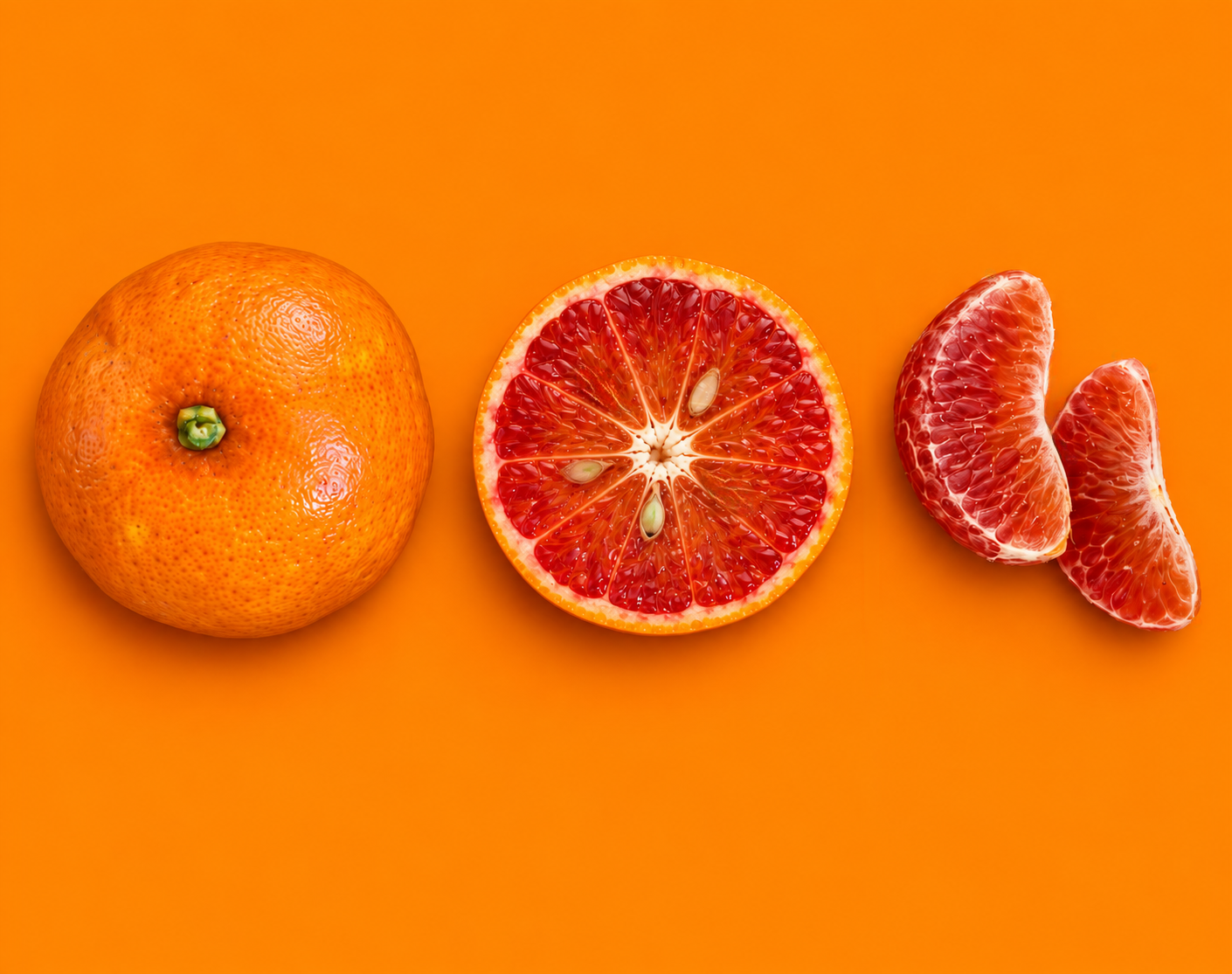
Among the best-known hybrids in Italy is the Tacle, a cross between the Tarocco blood orange and the clementine (hence the name “Ta” + “Cle”). Beyond its excellent organoleptic properties, it offers a major commercial advantage: its ability to remain on the tree until early spring, thereby extending the window of commercial availability.
Following the same logic is the mapo, a cross between the Avana mandarin and the Duncan grapefruit, featuring a thin rind and particularly juicy flesh, and the lipo, born from the hybridization of lemon and grapefruit. The same applies to the nova, a seedless mandarin cultivated in Sicily derived from the Orlando Tangelo and the Common Clementine.
Breeding and selection continuously give rise to new aromatic profiles and culinary applications. Such is the case with widespread mandarin oranges (a cross between mandarin and orange), the pompìa, a rare Sardinian citrus fruit and likely a cross between citron and lemon or grapefruit, and the limequat, a small fruit born from the union of lime and Oval Kumquat.

Between kinship and crossbreeding, the fresh produce aisle of the future will look increasingly like a family saga: a vast family tree filled with new unions, surprising varieties, and branches still waiting to be discovered.
Source:
- CREA – Consiglio per la ricerca in agricoltura e l’analisi dell’economia agraria. Agrumi e cambiamenti climatici: la ricerca CREA per nuove varietà e portinnesti. CREAFuturo, https://creafuturo.crea.gov.it/17216/.
- CREA – Consiglio per la ricerca in agricoltura e l’analisi dell’economia agraria. Agrumi: un patrimonio di biodiversità da tutelare e valorizzare. CREAFuturo, https://creafuturo.crea.gov.it/4363/.
- Il Sole 24 Ore. Dal Tacle al Mapo, così i nuovi tipi di agrumi allungano la stagione. Il Sole 24 Ore, https://www.ilsole24ore.com/art/dal-tacle-mapo-cosi-nuovi-tipi-agrumi-allungano-stagione-AIAzlRNB.
- Tipi di agrumi: elenco, nomi e varietà. Everli, https://it.everli.com/blog/tipi-agrumi-elenco-nomi-varieta.


