


Recommended for you

Circular economy in the field: when agricultural residues become new resources
In the traditional agricultural model, many production residues, such as harvest waste, agri-food processing by-products, or plant biomass, were treated as waste. The circular economy reverses this approach: what remains from agricultural production can become a new resource capable of generating renewable energy, natural fertilisers, or innovative materials.
The European Union considers this model one of the pillars of the ecological transition. The Circular Economy Action Plan, part of the European Green Deal, aims to reduce waste and enhance the value of biological resources, turning organic residues into new opportunities for both the economy and the environment.
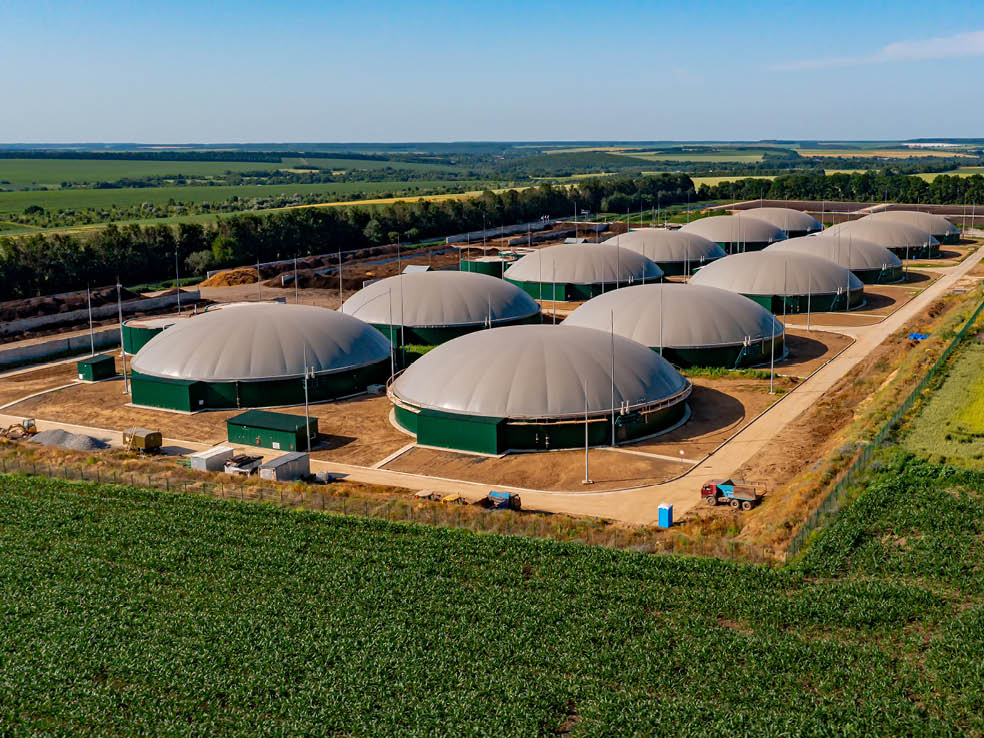
One of the most concrete examples of a circular economy in agriculture is the production of biogas and biomethane from agricultural residues and agri-food by-products. Crop residues, slurry, or processing waste are transformed through anaerobic digestion into combustible gas that can be used to generate electricity, heat, or renewable fuel.
According to the European Commission, energy produced from biomass and organic waste represents the primary source of renewable energy in the EU today: approximately 59% of renewable energy consumption derives from bioenergy, which includes agricultural biomass. This highlights agriculture’s strategic role in the energy transition.
This sector is particularly well-developed in Italy: the country boasts over 2,200 biogas plants, which convert by-products and residues from agricultural activities into renewable energy and organic fertilisers.
The benefits of the circular economy extend well beyond energy production. The processes that generate biogas also yield a by-product known as digestate, a nutrient-rich substance that can be used as a natural fertiliser in the fields. This creates a virtuous cycle: agricultural waste is transformed into energy while simultaneously helping to improve soil fertility and reducing reliance on chemical fertilisers.
For the fresh produce sector, this translates into a more sustainable supply chain: processing residues and agricultural biomass can serve as clean energy sources, contributing to emission reductions and fostering a more efficient, circular production system.
Sources
- European Commission. Circular Economy Action Plan. European Commission, https://environment.ec.europa.eu/strategy/circular-economy-action-plan_en.
- European Commission. Bioenergy Report: Bioenergy Sustainability in the EU. European Commission, 2023. https://energy.ec.europa.eu/news/bioenergy-report-outlines-progress-being-made-across-eu-2023-10-27_en
- European Biogas Association. Circular Bioeconomy and Biogas Systems. European Biogas Association, https://www.europeanbiogas.eu/policies/circular-bioeconomy/
- Osservatori Digital Innovation – Politecnico di Milano. Economia circolare: modelli di agricoltura sostenibile. ESG360 / Osservatori.net, https://www.osservatori.net/blog/sostenibilita-alimentare/economia-circolare-significato-come-funziona/
- CIB – Consorzio Italiano Biogas. Il biogas in Italia: dati e sviluppo del settore agricolo. Consorzio Italiano Biogas, https://www.consorziobiogas.it.


